Speaking and Writing (3)| 东西方说话和写作的思维区别
Speak with impact. Write with intent.
CAREER
2/8/20263 min read

中文(English version follows below.)
职场话题(2):东西方说话和写作的本质区别在哪里
有很多人对高情商会说话感兴趣。我们中国人和很多东亚的国家的人在西方社会里,说话和写作在工作和学习上不容易掌握好尺度。除了英文水平情商等因素,有一个很大的原因(也是很少人真正明白的原因,见下),是因为东西方文化不同和教育不同, 所以他们在逻辑上的表达方式我我们很不同。我刚开始工作几年是也吃了不少亏,慢慢摸索过来了。
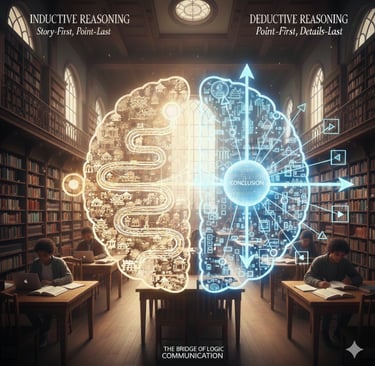
1. Inductive Reasoning (归纳推理,先细节再结论)
我们的教育是喜欢 娓娓道来,话中有话,一波三折,,最后来个总结,很多时候还没有总结,希望听者和读者自己猜出来,这样含蓄点到为止。这在西方里的说和工作上的写作和发学术文章都是非常吃亏的。随便举个例子,比如你和你老板在谈:
Bad:David told me that he had tried to rerun the experiment. He found… but the results were the same …He was frustrated and talked to Catie about changing the ingredients for the next experiments (背景故事娓娓道来). I think the ingredients have been well-tested, but we can review the steps (你的结论)。
2. Deductive Reasoning (演绎推理, 先结论,再细节,必要时再总结一下)
老美的教育逻辑思维是演绎推理,说和写是从general statement 开始,再加以细节。他们喜欢信息明确,不喜欢模糊(ambiguity),不喜欢让人猜你的意思。很多人往往以为老外喜欢直接,他们的性格就是这样,其实是他们的思维培训就是这样。
特别是在上级做工作汇报时或做讲座时,很多时候他们更是没有空听个前因后果,只想想先知道个大方向好找到解决方法,他们要细节时可以再问你。所以我们常常会听到老美 听了一会后可能会打断问: So? 或What is your point? 或不停地问Do you mean…? 这让我们有时有点气馁有点受伤,其实是上面说的推理演绎的不同。所以我们在说话,做报告,和写作时要很快地给老美这个point,再看他们的反应给出细节。上面的例子改一下后是:Our experiment failed. The ingredients have been well-tested, but not the steps. I think we can review the steps (你的结论)。
如果老板或同事问What happened? 你可以讲出David 和Catie的细节。他们很可能更感兴趣你的结论(如果这也是你想引出的更好),这时你就发挥你结论的支撑细节。这样呢,你也会给听者更多参与讨论的机会,而不是等你说了很多了,对方要不还不太清楚你的主要观点,要不说的都是旁支而不是你。
3. 信息和语气的平衡。我们往往用英文说话写东西时,信息不够明确(上面讲的Inductive Reasoning),可是有时信息明确了,口气又很生硬。其实老美讲究的是:信息明确但口气上要很(假)客气。他们常说It is not what you say, but how you say it. If you don’t have anything good to say, just don’t say it. 比较一下:
Good: Our experiment did not go well. The ingredients have been well-tested, but not the steps. I think we should review the steps (观点清楚,和那些non-nonsense的老板和同事这样是可以的)。
Better: Our experiment did not go well. As you know/may hear (留余地), the ingredients have been well-tested, but not the steps. I’d suggest that we review the steps。如果你的老板是玻璃心的爱做主的类型的,你弄不清他/它的态度,可以用更婉转的说法,多用问句引导去你想做的方向去,再让他们做主去好了:。。。I was wondering whether we should review the steps. What would you suggest?
4.写作和上面的说话同理,英文写e-mail,报告,和总结也是用Deductive Reasoning(演绎推理)。西方社会里不会写的人,难以在单位爬楼梯。写邮件和写作需要长期提高。
看起来挺复杂的是吗?也不是,要有质变,首先要刻意学习 (intentional learning),再加上平时留意用心(attentive practice),一点点积累就有进步了。现在有AI的帮助,也会容易很多了。
English Version
Career Insights (2): The Core Difference Between Eastern and Western Communication
Many professionals are interested in "High EQ" communication. However, for those of us from East Asia working in Western environments, finding the right "tone" in speaking and writing can be incredibly difficult.
Beyond English proficiency or social skills, there is a deeper reason for this struggle: the fundamental difference in logical reasoning. Early in my career, I suffered because of this gap, but over 20 years, I have decoded the pattern.
1. Inductive Reasoning (Details First, Conclusion Last)
In Eastern education, we are often taught to "tell a story." We provide context, weave through details, and build up to a climax or a subtle conclusion. Sometimes, we don't even state the conclusion, hoping the listener will "read between the lines."
In the West, this style is a major disadvantage in meetings, emails, and academic papers.
The "Bad" Example (Inductive): "David told me he tried to rerun the experiment. He found [X], but the results were the same. He was frustrated and talked to Catie about changing the ingredients... (the back-story continues). So, I think the ingredients are fine, but we should review the steps." (The point is buried at the end).
2. Deductive Reasoning (Conclusion First, Details Later)
Western logic is built on Deductive Reasoning. Whether speaking or writing, they start with a General Statement (the "Point") and then provide the supporting details. Westerners crave clarity and despise ambiguity; they don't want to play a guessing game with your meaning.
When reporting to a supervisor, they often don't have time for the "how" or "who"—they want to know the "what" so they can find a solution. If you use Inductive Reasoning, a Western boss will likely interrupt you with: "So?" or "What is your point?" or "Do you mean...?" This can feel hurtful or dismissive, but it’s simply a clash of logic.
The "Better" Example (Deductive): "Our experiment failed. The ingredients are well-tested, but the steps are not. I suggest we review the process."
If they want to know what happened with David and Catie, they will ask. By leading with the conclusion, you give the listener a chance to engage immediately rather than waiting for you to finish a long story.
3. Balancing Information and Tone
A common trap is that when we try to be "direct" (Deductive), our tone becomes too blunt or harsh. The "Western Art" of communication is: Be clear on information, but (performatively) polite in tone.
As the saying goes: "It’s not what you say, but how you say it." Compare these three levels:
Good (Clear): "Our experiment failed. I think we should review the steps." (Fine for no-nonsense colleagues).
Better (Softer): "Our experiment didn't go as planned. As you may know, the ingredients are solid, so I’d suggest we look at the steps."
Best (For "Sensitive" or Micro-managing Bosses): Use questions to lead them to your conclusion while letting them feel in control. "I was wondering whether we should review the steps. What would you suggest?"
4. Writing is No Different
The same rules apply to emails, reports, and summaries. In Western corporate culture, if you cannot write effectively using Deductive Reasoning, it is very difficult to climb the ladder. Writing is a skill that requires long-term, intentional improvement.
Summary
Transitioning your logic feels complex at first, but it comes down to two things: Intentional Learning and Attentive Practice. Pay attention to how successful leaders around you structure their thoughts. With the help of AI today, this process is much faster than it was when I started!
声明|Disclosure
As an Amazon Associate I earn from qualifying purchases – at no cost to you.
作为亚马逊联盟会员,我从符合条件的购买中获得收益
— 对你没有任何额外费用。
网站设计 |Website Design
喜欢我的网站设计吗? Hostinger 的AI模版帮了不少忙,不需要懂编程。用我的链接省20% 。
Like my website created with Hostinger? Its AI-assisted function can help a beginner develop a website with great vision and experience without knowing coding! Use my Hostinger referral link to save 20% off。喜欢我的网站设计吗? Hostinger 的AI模版帮了不少忙,不需要懂编程。用我的链接省20% 。
© 2026. All rights reserved.