Plant-based Protein | 植物蛋白
The 200g Rule: How a small shift from red meat to fava beans delivers big results.
DIET
2/8/20262 min read
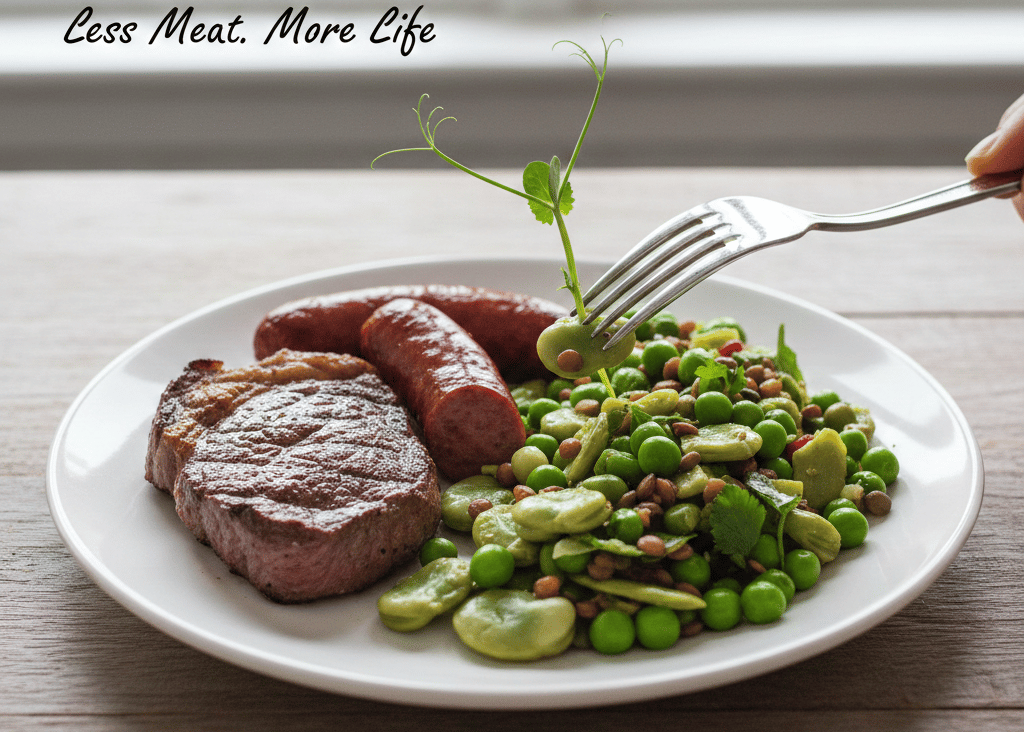
Plant-based Protein | 植物蛋白
中文版 (English version follows)
2025年,欧洲的营养科研杂志发布了一篇用非黄豆的其他豆子(如豌豆和蚕豆)代替红肉和加工肉类(RPM),探讨了对健康的影响。以下是针对该研究的总结:
研究背景:随着全球对可持续饮食的关注,减少红肉摄入并寻找环保的替代蛋白质来源已成为健康建议的核心 。最近有科研为红肉平反了,但很多的研究还是指明长期大量的红肉对健康带来的危害。
虽然豆类被公认为健康的肉类替代品,但关于其在不完全剔除肉类的情况下,对特定人群(尤其是红肉摄入量较高的男性)心脏代谢指标和营养充足性的具体影响,仍缺乏充分的临床实证。2025欧洲的这项研究临床实验给出了肯定的结果。
参与者:该名为“BeanMan”的临床研究在芬兰进行,一共有102名健康的适龄男性参加,他们平均年龄38岁,范围21-61岁。参与者被随机分为两组,进行了为期6周的饮食干预。
研究结果:研究发现,相比于维持高红肉摄入(每周760克)的对照组,豆类组(肉类减少至每周200克,由豆类补足蛋白质)表现出显著的健康改善:
心血管指标: 总胆固醇和低密度脂蛋白(“坏”胆固醇)水平显著下降。
体重管理: 在不限制热量的情况下,豆类组平均减重1公斤,BMI显著降低。
营养摄入: 豆类组的纤维、多不饱和脂肪酸和铁的摄入量显著增加,但饱和脂肪摄入减少。
营养状态: 虽然维生素B12和碘的水平略有下降,但在短期内仍保持在营养充足的范围内。
结论:研究得出结论,对于健康男性,将饮食中的红肉部分替换为豆类是一种安全且有效的适度膳食转变。这种方式不仅能改善心血管健康指标和辅助体重控制,且在短期内不会危及关键微量元素的营养状态。
实践行动:
逐步替代: 无需完全放弃红肉,可将每周红肉摄入控制在200克以内。
增加豆类品种: 在食谱中引入豌豆、蚕豆等非大豆类产品作为主蛋白源。看我关于吃各种豆子的帖子,我的豆子蛋白质和肉类的比例是40% 和 60%(红肉只占10%)。
关注特定营养: 长期进行此类转变时,应注意通过其他食物或强化食品补充维生素B12和碘。
English Version
In 2025, the European Journal of Nutrition published a study investigating the health impacts of replacing red and processed meat (RPM) with non-soy legumes (such as peas and fava beans). Here is a summary of that research:
Research Background
As global focus shifts toward sustainable diets, reducing red meat intake and seeking eco-friendly alternative protein sources have become core health recommendations. While some recent studies have attempted to "exonerate" red meat, a large body of research still indicates that long-term, high-volume consumption poses health risks.
Although legumes are widely recognized as healthy meat substitutes, there has been a lack of clinical evidence regarding the specific effects—on both cardiometabolic markers and nutritional adequacy—of partially replacing meat in the diets of specific groups, particularly men with high red meat intake. This 2025 European clinical trial provided definitive positive results.
Participants
The clinical study, titled "BeanMan," was conducted in Finland. It recruited 102 healthy working-age men with an average age of 38 (ranging from 21 to 61 years). Participants were randomly assigned to two groups for a 6-week dietary intervention.
Research Results
Compared to the control group, which maintained a high red meat intake (760g per week), the legume group (which reduced meat to 200g per week and supplemented the protein with legumes) showed significant health improvements:
Cardiovascular Indicators: Levels of total cholesterol and LDL ("bad" cholesterol) dropped significantly.
Weight Management: Without any calorie restrictions, the legume group lost an average of 1 kg, and their BMI decreased significantly.
Nutrient Intake: Intake of fiber, polyunsaturated fatty acids, and iron increased significantly, while saturated fat intake decreased.
Nutritional Status: Although Vitamin B12 and iodine levels dipped slightly, they remained within the range of "nutritional adequacy" during the short-term study.
Conclusion
The study concludes that for healthy men, partially replacing red meat with legumes is a safe and effective moderate dietary shift. This approach improves cardiovascular health markers and assists in weight control without jeopardizing essential micronutrient status in the short term.
Practical Actions
Gradual Substitution: You don’t need to give up red meat entirely; try limiting intake to under 200g per week.
Diversify Your Legumes: Incorporate non-soy products like peas and fava beans into your recipes as primary protein sources. See my post about how I take a variety of beans. I eat 40% legume protein vs. 60% animal protein (with red meat only making up only 10% of that total.)
Monitor Specific Nutrients: If making this shift long-term, ensure you are getting enough Vitamin B12 and iodine through other food sources or fortified products.
Reference
Bäck, S., Päivärinta, E., Pellinen, T., Kaartinen, N. E., Männistö, S., & Pajari, A.-M. (2025). Nutritional and health benefits of a partial substitution of red and processed meat with non-soy legumes: a 6-week randomized controlled trial in healthy working-age men. European Journal of Nutrition, 64(6), 259. https://doi.org/10.1007/s00394-025-03783-x
声明|Disclosure
As an Amazon Associate I earn from qualifying purchases – at no cost to you.
作为亚马逊联盟会员,我从符合条件的购买中获得收益
— 对你没有任何额外费用。
网站设计 |Website Design
喜欢我的网站设计吗? Hostinger 的AI模版帮了不少忙,不需要懂编程。用我的链接省20% 。
Like my website created with Hostinger? Its AI-assisted function can help a beginner develop a website with great vision and experience without knowing coding! Use my Hostinger referral link to save 20% off。喜欢我的网站设计吗? Hostinger 的AI模版帮了不少忙,不需要懂编程。用我的链接省20% 。
© 2026. All rights reserved.