Orange to Reduce Hepatic Steatosis |橙子帮助减少脂肪肝
Skip the juice, save the liver: Why your next orange belongs in your hand, not a glass.
DIET
2/7/20262 min read
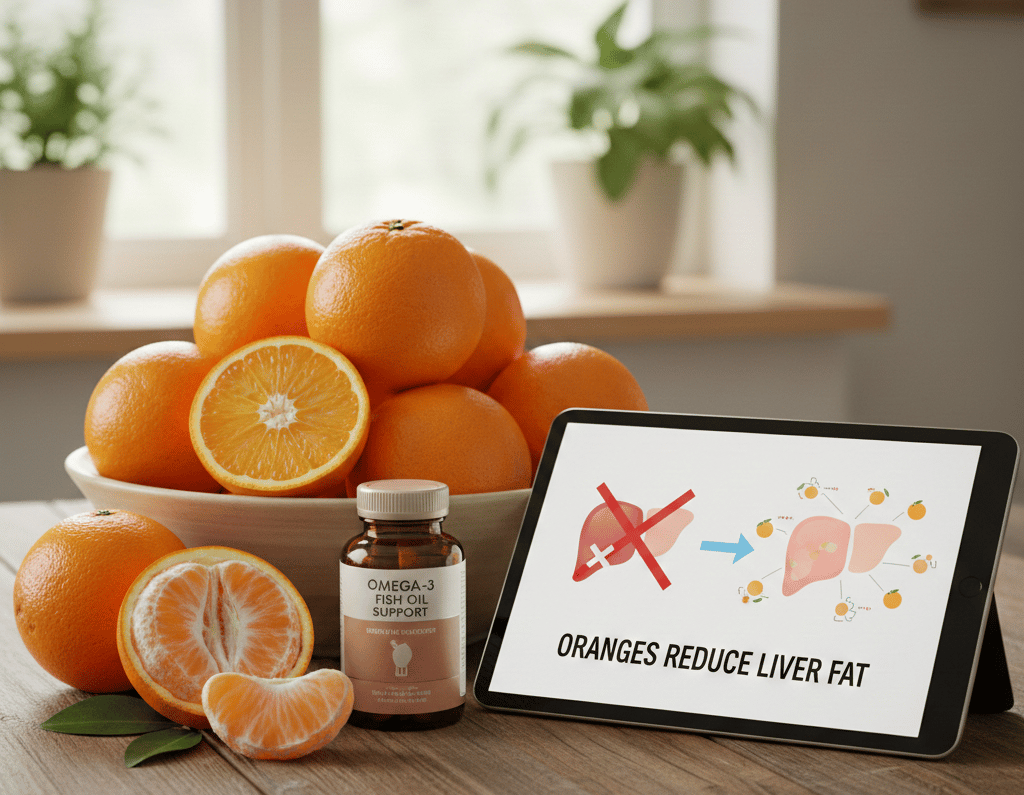
Daily Consumption of an Orange Helps Reduce 30% of Hepatic Steatosis | 每天一颗橙子帮助脂肪肝减负30%
-------------------------------------------------------------------------
中文版 (English Version Follows Below.)
在2024年的《营养学》(Nutrients)杂志上,来自意大利的科研人员发表了《每日食用橙子可降低代谢功能障碍相关脂肪肝患者的肝脂肪变性患病率:一项随机临床试验的探索性结果》。
以下是该研究的详细摘要:
研究背景与方法
此前的科研是用在动物身上的,科研表明富含黄酮类化合物的橙汁可以减少肥胖和肝脂肪变性。这次的试验是用在人类身上,而且是直接食用整颗的橙子(非橙汁),来观察对代谢功能障碍相关脂肪肝(MASLD)的影响。
这次试验随机临床试验招募了62名30至65岁的MASLD患者。参与者被随机分为两组:一组每天食用400克整个橙子,另一组的患者食用同等分量的非柑橘类水果。实验持续了4周。
主要研究结果
肝脂肪变性显著改善: 经过4周的干预,橙子组中仍患有肝脂肪变性的比例降至70.9%,而对照组仍为100%。这意味着在短短一个月内,橙子组的疾病患病率降低了约30%。
肝功能指标: 虽然纤维化程度和多数肝酶没有显著变化,但橙子组的血浆谷氨酰转肽酶(GGT)水平显著下降,提示肝功能有所改善。
独立于体重变化: 值得注意的是,上述脂肪肝的改善,是在体重、腰围、体脂成分及热量摄入未发生显著改变的情况下实现的。也就是说,吃橙子对肝脏的好处,是在这些传统的指标之外的,是直接作用于肝脏的。
营养素增加: 橙子组的丰富的类黄酮可以促进脂肪酸的分解和抑制脂肪的合成;还有维丰富的维生素C帮助肝细胞抵制自由基对肝脏的损伤;还有维生素A、硫胺素(B1)和核黄素(B2)和维生素A, 患者的摄入量显著增加,让肝脏的代谢更顺畅。
研究结论
研究结果表明,食用富含植物化学物质的整个橙子,可作为MASLD的辅助治疗手段。这种改善肝脂肪变性的作用是直接产生的,并不依赖于体重减轻。作者建议未来开展更长期的研究,以进一步探索橙子中特定的生物活性化合物及其作用机制。当然,这项研究的局限性是,4周时间还是不够长。
如何吃?
吃真个完整的橙子而非喝橙汁,因为橙子里面的果肉和白瓤里有宝贵的类黄酮(即橙皮苷和柚皮素等)。果汁会流失活性成分而且糖分会被很快地吸收。
每天吃400克,也就是每天吃1-2个完整的橙子。不必要一次吃完,分散到一天中去吃。
平时饮食配合富含鱼油的深海鱼,对肝脏的保护会更好。
English Version
Daily Orange Consumption and Liver Health (2024)In 2024, Italian researchers published a study in the journal Nutrients titled: "Daily Orange Consumption Reduces Hepatic Steatosis Prevalence in Patients with Metabolic Dysfunction-Associated Steatotic Liver Disease: Exploratory Outcomes of a Randomized Clinical Trial."
1. Background & Methodology
While previous animal studies showed that flavonoid-rich orange juice could reduce obesity and liver fat, this trial focused on humans and the consumption of whole oranges (not juice) to observe the effects on Metabolic Dysfunction-Associated Steatotic Liver Disease (MASLD).
The randomized clinical trial involved 62 patients (aged 30–65) with MASLD. Participants were split into two groups for 4 weeks:
Orange Group: Consumed 400g of whole oranges daily.
Control Group: Consumed an equivalent amount of non-citrus fruits.
2. Key Findings
Significant Improvement in Steatosis: After 4 weeks, the prevalence of liver steatosis in the orange group dropped to 70.9%, while it remained at 100% in the control group. This represents a 30% reduction in disease prevalence in just one month.
Improved Liver Function: While fibrosis and most liver enzymes remained steady, the orange group showed a significant decrease in Gamma-Glutamyl Transferase (GGT) levels, signaling improved liver health.
Independent of Weight Loss: Notably, these liver improvements occurred without significant changes in body weight, waist circumference, body fat percentage, or total calorie intake. This suggests that oranges act directly on the liver rather than through general weight loss.
Nutritional Boost: The high flavonoid content in oranges helps promote fatty acid breakdown and inhibits fat synthesis. Additionally, Vitamin C protects liver cells from free radical damage, while Vitamin A, B1 (thiamine), and B2 (riboflavin) support smoother liver metabolism.
3. Conclusion
Eating whole oranges rich in phytochemicals serves as an effective supplementary treatment for MASLD. The effect is direct and independent of weight loss. Researchers suggest further long-term studies to pinpoint the exact bioactive compounds involved. Of course, the limitation of the study is that 4 weeks are not long enough.
How to Incorporate This Into Your Diet
Eat the Whole Fruit: Do not just drink the juice. The pulp and the "white pith" (albedo) of the orange contain valuable flavonoids like hesperidin and naringenin. Juicing removes these active compounds and leads to faster sugar absorption.
The Dosage: Aim for 400g per day, which is roughly 1 to 2 whole oranges. You don't have to eat them all at once; you can spread them throughout the day.
Synergy with Fish Oil: For maximum liver protection, pair your fruit intake with a diet rich in deep-sea fish (Omega-3/fish oil), as they work together to support hepatic health.
Reference
Notarnicola M, Tutino V, De Nunzio V, Cisternino AM, Cofano M, Donghia R, Giannuzzi V, Zappimbulso M, Milella RA, Giannelli G, Fontana L. Daily Orange Consumption Reduces Hepatic Steatosis Prevalence in Patients with Metabolic Dysfunction-Associated Steatotic Liver Disease: Exploratory Outcomes of a Randomized Clinical Trial. Nutrients. 2024 Sep 20;16(18):3191. doi: 10.3390/nu16183191. PMID: 39339791; PMCID: PMC11435367.
声明|Disclosure
As an Amazon Associate I earn from qualifying purchases – at no cost to you.
作为亚马逊联盟会员,我从符合条件的购买中获得收益
— 对你没有任何额外费用。
网站设计 |Website Design
喜欢我的网站设计吗? Hostinger 的AI模版帮了不少忙,不需要懂编程。用我的链接省20% 。
Like my website created with Hostinger? Its AI-assisted function can help a beginner develop a website with great vision and experience without knowing coding! Use my Hostinger referral link to save 20% off。喜欢我的网站设计吗? Hostinger 的AI模版帮了不少忙,不需要懂编程。用我的链接省20% 。
© 2026. All rights reserved.